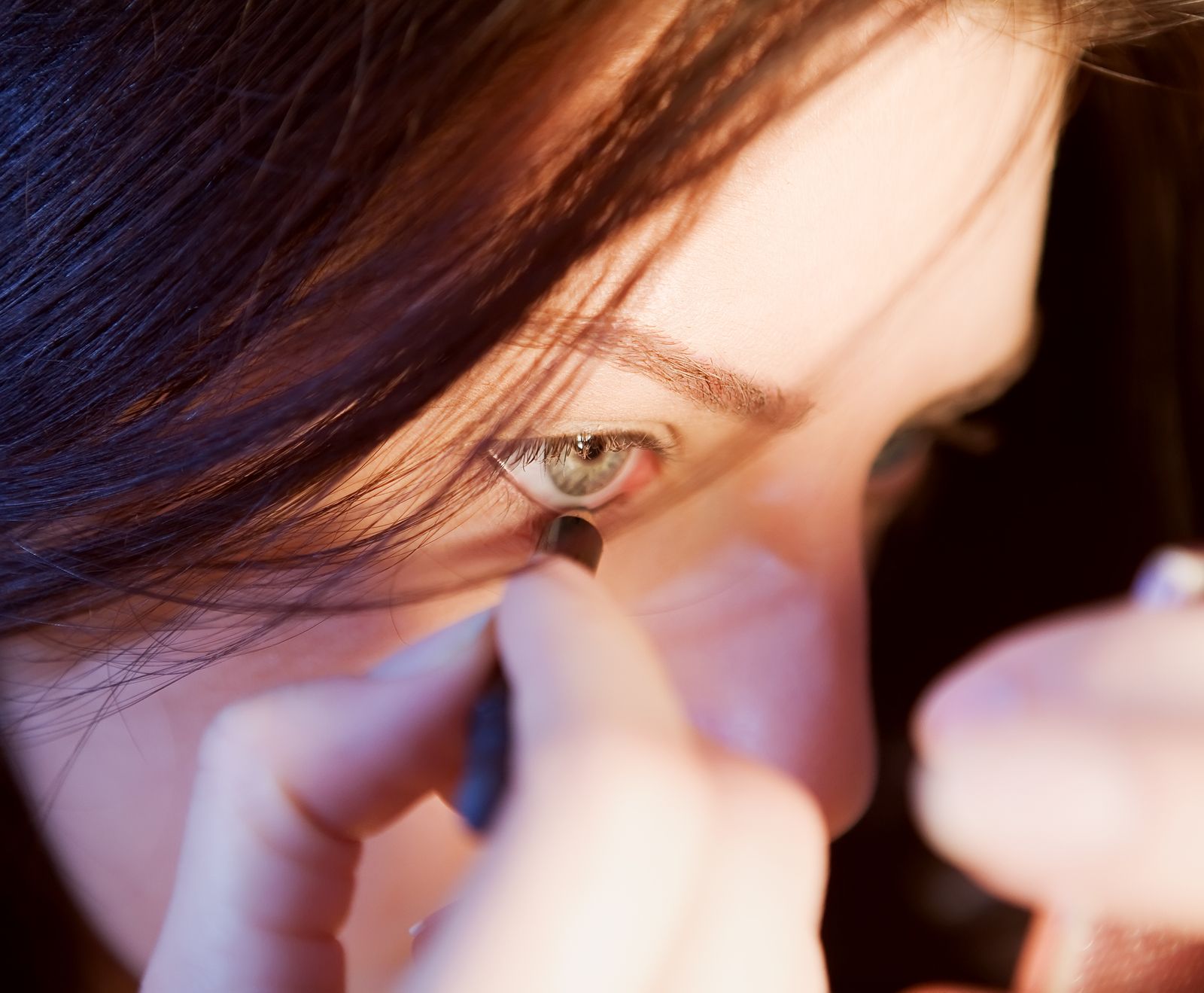
Maybe you are going on a trip, switching products, or just wondering whether you are committed for life. Whatever the reason, it is a fair question: what actually happens to your lashes when you stop using a lash serum?
The answer depends a lot on what kind of serum you were using. A prescription prostaglandin drug and a cosmetic conditioning serum behave very differently, and so do their side effects. This guide explains both, starting with how lashes naturally cycle. If you want the background on ingredient types first, see what prostaglandin-free means and why it matters.
Key takeaways
- Stopping a lash serum does not make healthy lashes fall out. Lashes shed and replace themselves on their own natural cycle.
- For prescription bimatoprost (Latisse), the FDA label says lashes are expected to return to their pre-treatment level after stopping [1].
- Some prostaglandin side effects fade after stopping, but iris darkening is considered permanent [1][2].
- With a cosmetic conditioning serum, the look you have maintained fades gradually as lashes turn over, often over several months.
First, a quick look at how lashes cycle
Every eyelash grows from its own follicle and moves through three phases. Anagen is the growing phase and lasts about 4 to 10 weeks. Catagen is a short transition of about 15 days. Telogen is the resting phase and lasts about 4 to 9 months, after which the lash sheds and a new one begins [3]. The whole cycle lasts roughly 4 to 11 months [3][4].
This matters because it explains why nothing changes overnight when you stop. The lashes on your lids right now will stay until their own cycle ends. Any change after stopping a serum shows up slowly, as old lashes are shed and new ones replace them. For a deeper look, read How Long Does Lash Serum Take? The Lash Cycle Explained.
By the numbers
- In the NIH StatPearls reference Anatomy, Head and Neck: Eyelash (Patel et al., updated 2023), the eyelash resting phase (telogen) lasts 4 to 9 months and the full cycle 4 to 11 months [3].
- In the FDA label for Latisse, 78% of patients using the drug had at least a 1-grade improvement in overall eyelash prominence at week 16, compared with 18% on vehicle [1].
If you stop a prescription prostaglandin (Latisse)
Latisse is bimatoprost ophthalmic solution 0.03%, a prescription drug approved by the FDA to treat hypotrichosis of the eyelashes. Unlike a cosmetic, it does change lash growth. Its label is also clear about what happens when you stop: upon discontinuation, eyelash growth is expected to return to its pre-treatment level [1].
In other words, the drug effect only lasts while you keep using it. Once you stop, lashes continue cycling, and over the following months the new lashes that replace old ones grow the way they did before treatment.
Which side effects fade, and which may not
The American Academy of Ophthalmology notes that bimatoprost can cause eye redness, irritation and darkening of the eyelid skin, and that these usually go away after stopping the drug [2]. However, darkening of the iris, the colored part of the eye, has been reported and cannot be reversed [2]. The FDA label describes increased brown iris pigmentation as likely to be permanent [1].
The Latisse label also warns that hair can grow in areas where the solution repeatedly touches the skin [1]. Our article on prostaglandin lash serum side effects covers all of these in more detail.
What about over-the-counter prostaglandin serums?
Some over-the-counter lash serums contain prostaglandin analogs such as isopropyl cloprostenate. The AAO points out that these have not been FDA tested, so their safety and effects are not known [2]. If you used one of these, it is reasonable to watch for the same kinds of changes and to talk to an eye doctor about anything that worries you. Our guide on how to spot prostaglandin analogs on a label can help you check what you were using.
If you stop a prostaglandin-free cosmetic serum
A prostaglandin-free cosmetic serum like XXtraLash works differently. It is not a drug and does not change how lashes grow. It conditions the lashes you have so the lash line can look longer and fuller. When you stop, there is no drug effect to wear off, and no prostaglandin-related side effects to watch for.
What happens instead is gradual. The conditioning benefit applies to the lashes you have now. As those lashes reach the end of their natural cycle and are replaced, your lash line slowly returns to how it looked before you started, along with whatever your everyday habits contribute. Because the resting phase alone can last months, this tends to happen slowly rather than all at once [3].
Why it can feel like lashes are falling out
Some people notice a few lashes on their cheek or pillow after stopping and worry that the serum caused it. Usually, this is just normal turnover that was always happening. With roughly 90 to 160 lashes on the upper lid and 75 to 80 on the lower lid, a few shed lashes each day is expected [3]. What is not normal is sudden loss of many lashes or bald patches, which is a reason to see a doctor.
Prescription vs. cosmetic: what changes when you stop
| Prescription bimatoprost (Latisse) | Prostaglandin-free cosmetic serum | |
|---|---|---|
| What it is | FDA-approved drug for hypotrichosis [1] | Cosmetic that conditions lashes |
| Effect on growth | Changes lash growth while used [1] | Does not change lash growth |
| After stopping | Lashes expected to return to pre-treatment level [1] | Look fades gradually as lashes naturally turn over |
| Possible lasting effects | Iris darkening may be permanent [1][2] | No prostaglandin-related changes |
| Need a prescription? | Yes | No |
Switching from a prostaglandin serum to a prostaglandin-free one
Some people stop a prostaglandin serum because of side effects or concerns about long-term changes, then move to a prostaglandin-free cosmetic. That is a reasonable choice, but it helps to set expectations. A cosmetic serum is not a substitute for a drug and will not reproduce a drug effect. As lashes cycle after stopping a prostaglandin, you may notice your lash line gradually changing, and that is expected [1].
If you make the switch, give the new routine a fair trial of 8 to 12 weeks of daily use, take photos so you can compare honestly, and check in with an eye doctor if you had any redness, eyelid darkening or other changes while on the prostaglandin. Our guide on how to choose the best prostaglandin-free lash serum explains what to look for on the label.
Tips if you are taking a break
- Keep the habits that protect lashes. Gentle makeup removal and avoiding rubbing matter whether or not you use a serum. See our lash care guide.
- Store the bottle properly. Close it tightly and keep the brush clean. Do not share eye products with anyone [5].
- Take a photo before you stop. It gives you a fair baseline if you decide to restart later.
- Restart patiently. If you go back to a cosmetic serum, give it another 8 to 12 weeks of daily use before judging how your lashes look.
- Watch out for lash-breaking habits. Heavy waterproof mascara and rough removal can make lashes look sparse. See mascara habits that break lashes.
Reasons you might stop, and what to do
Irritation or redness
If any lash product makes your eyes or lids red, itchy, or sore, stop using it. The FDA advises stopping any eye-area product that causes irritation and seeing a doctor if it persists [5]. Our article on lash serum for sensitive eyes has tips for choosing a gentler routine.
Pregnancy, surgery, or a new eye condition
These are all good times to pause and check with a professional. Read lash serum during pregnancy and breastfeeding for more, and always tell your eye doctor what you use near your eyes.
When to see an eye doctor
Please see an eye doctor or dermatologist if you notice:
- Eye redness, pain, swelling or discharge that does not settle after stopping a product.
- Any change in the color of your iris, or darkening of the eyelid skin that does not fade.
- Sudden lash loss, patchy loss, or loss of eyebrow hair as well.
- Any change in your vision.
Our guide to thin or falling eyelashes explains common causes, and the lash resources page can help you find the right specialist.
Prefer a prostaglandin-free lash routine?
XXtraLash is a prostaglandin-free eyelash serum that conditions lashes for a longer-looking, fuller-looking lash line. Each 3 mL bottle comes with a precision brush for applying right along the lash line.
Frequently asked questions
Will my lashes fall out if I stop using lash serum?
Stopping a lash serum does not make healthy lashes fall out. Lashes shed a few at a time as part of their normal cycle whether you use a serum or not. Over the following months, your lash line gradually returns to how it looked before you started.
How long do lash serum results last after stopping?
It depends on the product type. For prescription bimatoprost (Latisse), the FDA label says lashes are expected to return to their pre-treatment level after stopping. For a cosmetic conditioning serum, the look you have been maintaining fades gradually as lashes turn over across the natural cycle, which can last 4 to 11 months.
Do prostaglandin side effects go away when you stop?
According to the American Academy of Ophthalmology, eye redness and darkened eyelid skin from bimatoprost usually fade after stopping, but darkening of the iris (the colored part of the eye) cannot be reversed.
Can I take a break from lash serum and start again?
Yes. You can pause a cosmetic lash serum and restart it later. If you restart, give it another 8 to 12 weeks of daily use before judging how your lashes look.
Should I stop lash serum before an eye procedure?
Tell your eye doctor about every product you use near your eyes, including cosmetic serums, and follow their instructions about stopping before surgery or other procedures.
Related reading
- How Long Does Lash Serum Take? The Lash Cycle Explained
- Prostaglandin Lash Serum Side Effects: Darkened Lids, Eye Color and Fat Loss
- Latisse vs. Over-the-Counter Lash Serums: What’s the Difference?
- Is Lash Serum Safe? What to Know Before You Start
- How to Apply Lash Serum the Right Way
Sources
- U.S. FDA. LATISSE (bimatoprost ophthalmic solution) 0.03% prescribing information (FDA Label database).
- American Academy of Ophthalmology. What You Should Know About Eyelash Growth Serums.
- Patel BC, Lopez MJ, Joos ZP. Anatomy, Head and Neck: Eyelash. StatPearls, NCBI Bookshelf, updated 2023.
- Aumond S, Bitton E. The eyelash follicle features and anomalies: A review. Journal of Optometry, 2018.
- U.S. FDA. Eye Cosmetic Safety.