If you have shopped for a lash serum lately, you have probably seen the phrase “prostaglandin-free” on some boxes and not on others. That small label tells you a lot about what is inside the bottle and how the formula is meant to work.
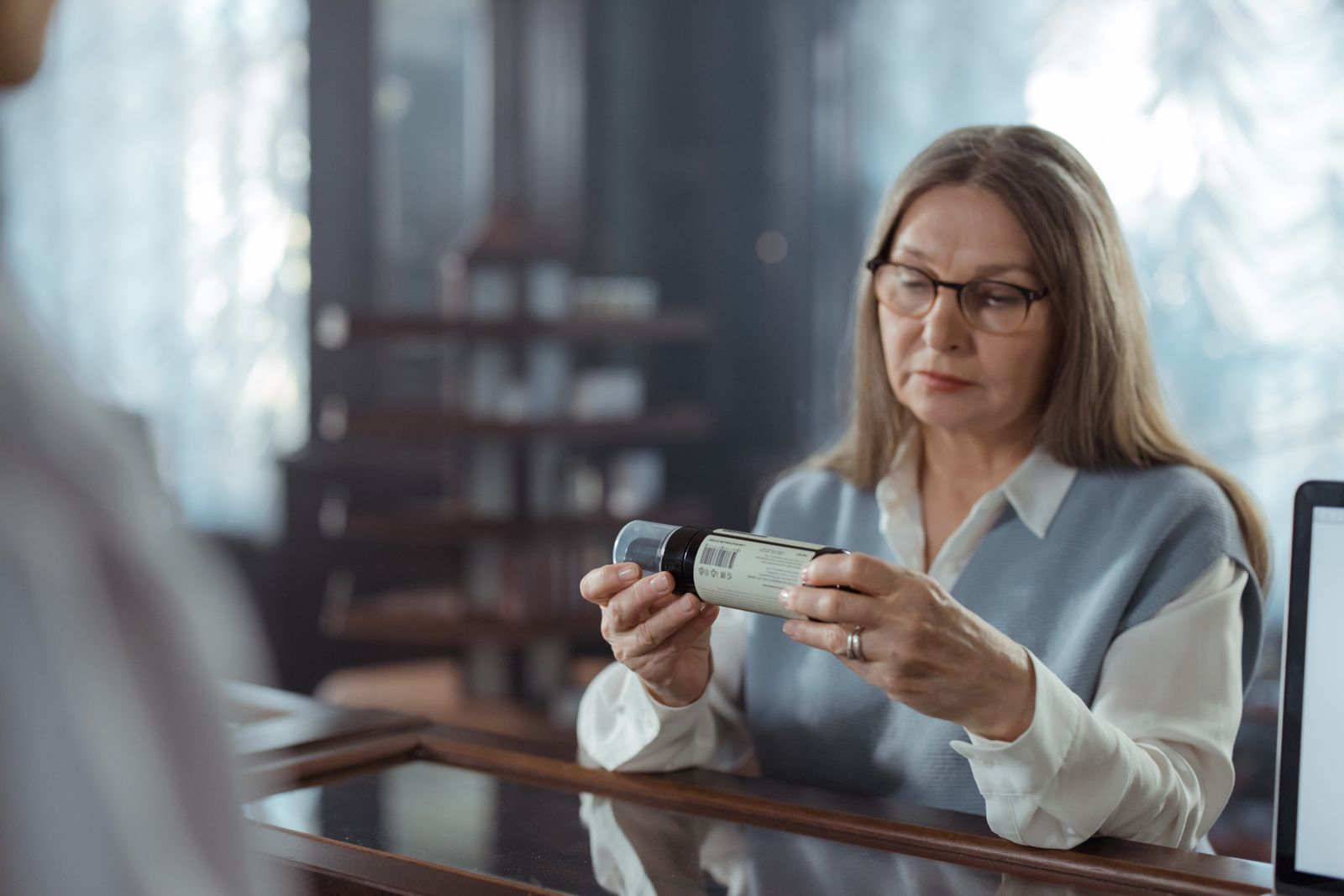
This guide explains what prostaglandin analogs are, why some serums use them, what side effects have been documented, and what prostaglandin-free serums use instead. If you are still sorting out the different kinds of products, our overview of lash serum types, ingredients and how to choose is a helpful companion.
Our goal is simple: help you read a label with confidence and know when it makes sense to check in with an eye doctor before you start anything new.
Key takeaways
- Prostaglandin analogs such as bimatoprost and isopropyl cloprostenate are drug-like ingredients. Bimatoprost is the active ingredient in prescription Latisse.
- Documented side effects of prostaglandin analogs around the eye include darkened eyelid skin, irritation, changes in the fat around the eye, and, with the prescription drug, iris color change that is likely permanent.
- A prostaglandin-free serum skips these ingredients and uses conditioning peptides, proteins and botanicals to help lashes look longer and fuller.
- If you have glaucoma, an eye condition, recent eye surgery, or any eye symptoms, talk to an eye care professional before using any lash serum.
What prostaglandin analogs are
Prostaglandins are natural signaling molecules in the body. Prostaglandin analogs are lab-made compounds designed to act like one of them, prostaglandin F2-alpha. In medicine, several of these analogs are prescription eye drops used to lower eye pressure in glaucoma.
Doctors noticed early on that patients using one of those glaucoma drops, bimatoprost, often developed longer, fuller and darker lashes. That observation led to Latisse, a 0.03% bimatoprost solution that the FDA approved in 2008 to treat hypotrichosis, meaning inadequate or not enough eyelashes [1][4]. The prescribing label describes it as increasing eyelash growth, including length, thickness and darkness [2].
That is the key point: a prostaglandin analog is a drug-type ingredient with real biological effects. It is not simply a conditioner.
Names you may see on a label
Prostaglandin analogs usually do not say “prostaglandin” on the box. Instead, they appear under chemical names. Some of the ones you may come across include:
- Bimatoprost: the active drug in prescription Latisse and the glaucoma drop Lumigan [1].
- Isopropyl cloprostenate: a prostaglandin analog the American Academy of Ophthalmology says is commonly found in over-the-counter lash serums and is not FDA approved [1].
- Dechloro dihydroxy difluoro ethylcloprostenolamide: a long chemical name for another prostaglandin-like ingredient used in some cosmetic serums.
- Methylamido dihydro noralfaprostal and similar names that include “prost” or “cloprostenol”.
A quick rule of thumb: if an ingredient name contains “prost”, “cloprostenol” or “cloprostenate”, treat it as a prostaglandin analog and look into it further. Our step-by-step guide on how to spot prostaglandin analogs on a lash serum label walks through real-world label reading in more detail.
Why some lash serums contain them
Because bimatoprost clearly affects lashes, other companies began adding related compounds to cosmetic serums. Unlike Latisse, these cosmetic products are not reviewed by the FDA for safety and effectiveness before they are sold. The American Academy of Ophthalmology points out that because these serums have not been FDA tested, their safety and effectiveness are unknown [1].
There is also the question of what is actually in the bottle. A 2022 laboratory study tested 64 eyelash serums bought online in Japan for 14 different prostaglandin F2-alpha analogs [5]. Some products contained these compounds without listing them on the package. The authors warned that easy online access to serums containing these analogs creates a risk of serious side effects, especially when consumers are not told what is inside [5].
By the numbers
- In a laboratory analysis of eyelash serums (Rahman et al., Journal of Pharmaceutical and Biomedical Analysis, 2022), 4 of 64 products contained bimatoprost, and 3 of those 4 did not list it on the package label [5].
- The same analysis found 8 more products containing other prostaglandin F2-alpha analogs that have never been used as medicines [5].
- In the FDA review of Latisse, the most common side effects occurred in roughly 3% to 4% of the 278 adults studied over 4 months [2].
For a neutral, side-by-side look at the prescription option and store-bought serums, see Latisse vs. over-the-counter lash serums.
Documented side effects of prostaglandin analogs
Most of what we know comes from prescription bimatoprost and from glaucoma drops, because those have been studied far more than cosmetic serums. Here are the effects that come up most often. For a deeper dive, read prostaglandin lash serum side effects.
Darkening of the eyelid skin
The Latisse label warns that bimatoprost can darken the pigmented skin around the eye and the lashes themselves. The label notes this has been reported to be reversible in most patients after they stop [2]. The American Academy of Ophthalmology also lists darker eyelid skin among the common side effects [1].
Iris color change
With the prescription drug, increased brown pigmentation of the iris, the colored part of the eye, can occur. The label states that iris pigmentation is likely to be permanent [2], and the American Academy of Ophthalmology notes this side effect cannot be reversed [1]. The label notes the change may not be noticeable for months to years [2].
Prostaglandin-associated periorbitopathy
Prostaglandin-associated periorbitopathy, often shortened to PAP, describes a group of changes around the eye linked to prostaglandin analog drops. An American Academy of Ophthalmology review lists features such as a deepening of the upper eyelid crease, loss of fat around the eye, a slightly sunken look, a droopy upper lid and tighter eyelids [3]. A 2021 safety review in Dermatologic Surgery concluded that clinical trials of bimatoprost for lashes may have underreported both application discomfort and this periorbitopathy, and that iris pigmentation risk remains inadequately investigated [4].
Irritation, redness and itching
The most common side effects in the Latisse trial were itchy eyes, red eyes, skin darkening, eye irritation, dry eye symptoms and redness of the eyelid [2]. The label also warns about hair growth on skin that the solution repeatedly touches, which is why it advises blotting off any excess [2].
| Side effect | What it looks like | What the evidence says |
|---|---|---|
| Eyelid skin darkening | Brownish shadow along the lid | Listed on the Latisse label; reported reversible in most patients after stopping [2] |
| Iris color change | Light eyes gradually turn browner | Listed on the Latisse label; likely permanent [1][2] |
| Periorbitopathy (PAP) | Hollow upper lid, sunken look, tight lids | Described with prostaglandin eye drops; may be underreported in lash trials [3][4] |
| Irritation and redness | Itching, redness, dryness | Most common reactions in the Latisse trial, about 3% to 4% [2] |
| Unwanted hair growth | Fine hair where liquid drips | Label warning; blot excess solution [2] |
None of this means every person who uses a prostaglandin serum will have these effects. It does mean these ingredients act like medicine, and it is fair to weigh them the way you would weigh a medicine. Our article Is lash serum safe? covers the broader safety picture for every type of serum.
How to read a lash serum label
You do not need a chemistry degree. A few habits make it much easier:
- Find the full ingredient list (often called INCI). It may be printed on the outer box, on a peel-back label, or on the brand website.
- Scan for “prost”, “cloprostenol”, “cloprostenate” or “bimatoprost”. Any of these signals a prostaglandin analog.
- Be cautious with products that hide the full list or only name a “proprietary complex”.
- Look for a clear “prostaglandin-free” statement, then confirm it against the ingredients.
- Remember that “natural”, “clean” or “gentle” are not regulated terms and do not tell you whether a prostaglandin analog is present.
Because some products tested in the lab contained analogs that were not on the label [5], it also helps to buy from a brand that publishes a complete ingredient list and has a clear way to contact them.
What prostaglandin-free serums use instead
A prostaglandin-free serum is a cosmetic. Instead of a drug-type ingredient, it relies on conditioning ingredients that help lashes look and feel their best. Common choices include:
- Peptides, such as myristoyl pentapeptide-17 and myristoyl pentapeptide-16, which are small chains of amino acids used in cosmetics as conditioning agents. Learn more in peptides in lash serums.
- Proteins, such as hydrolyzed soy protein, which coat and condition the lash.
- Botanicals and soothing ingredients, such as aloe and sage extract.
- Antioxidants, such as vitamin E (tocopherol).
These ingredients are chosen to condition lashes so they look longer, fuller and healthier. They are not drugs, and an honest prostaglandin-free brand will not promise drug-like results. If you are comparing options, our guide on how to choose the best prostaglandin-free lash serum lays out what to look for.
Realistic expectations
It helps to go in with clear expectations:
- Cosmetic serums aim for a longer-looking, fuller-looking lash line. They are not a medical treatment for lash loss.
- Consistency matters. Most serums are designed for daily use, and it takes regular use to judge how your lashes look.
- Your natural lash cycle sets the pace. You can read more in how long lash serum takes.
- Good habits still matter. Gentle makeup removal and less rubbing can make a real difference in how lashes look. See our lash care guide.
If your lashes are thinning quickly, falling out in patches, or the change came with other symptoms, a serum is not the right first step. Start with our guide to thin or falling eyelashes and talk to a doctor.
When to see an eye doctor
Talk to an ophthalmologist or optometrist before starting any lash serum if any of these apply to you:
- You have glaucoma or use prescription eye-pressure drops. The American Academy of Ophthalmology advises people with glaucoma, macular edema or uveitis to talk to an ophthalmologist before using Latisse [1].
- You have had recent eye surgery, an eye infection or eye inflammation.
- You are pregnant or breastfeeding. Latisse is not recommended in these situations [1]. Read more in lash serum during pregnancy and breastfeeding.
- You have very sensitive eyes, frequent allergies or a history of reactions to eye products.
Stop using the product and contact an eye care professional right away if you notice eye pain, ongoing redness, swelling, discharge, a change in your eye color, or any change in your vision [1]. If you need help finding the right specialist, our lash resources page explains who to see and how to find them.
Looking for a prostaglandin-free lash serum?
XXtraLash is a prostaglandin-free eyelash serum that conditions lashes for a longer-looking, fuller-looking lash line. Each 3 mL bottle comes with a precision brush for applying right along the lash line.
Frequently asked questions
What does prostaglandin-free mean on a lash serum?
It means the formula does not contain a prostaglandin analog, the drug-like ingredient family that includes bimatoprost and isopropyl cloprostenate. A prostaglandin-free serum relies on other ingredients, such as conditioning peptides, proteins and botanical extracts, to care for the look of your lashes.
Is isopropyl cloprostenate a prostaglandin?
Yes. Isopropyl cloprostenate is a prostaglandin analog. The American Academy of Ophthalmology notes it is commonly found in over-the-counter lash serums and is not FDA approved, unlike the bimatoprost in prescription Latisse.
Can prostaglandin lash serums change my eye color?
Increased brown pigmentation of the iris is a listed warning for prescription bimatoprost (Latisse), and the label says it is likely to be permanent. Cosmetic serums with prostaglandin analogs have not gone through the same FDA review, so their risks are less well studied. If you notice any change in your eye color, see an eye doctor.
Do prostaglandin-free lash serums work as well as Latisse?
They work differently. Latisse is an FDA-approved drug for hypotrichosis of the eyelashes. A prostaglandin-free cosmetic serum is designed to condition lashes so they look longer and fuller. It is not a drug, and it should not be expected to act like one.
Should I talk to an eye doctor before using a lash serum?
It is a good idea if you have glaucoma, uveitis, macular edema, recent eye surgery, an eye infection, very sensitive eyes, or you are pregnant or breastfeeding. Stop any lash product and contact an eye care professional if you have redness, pain, swelling or vision changes.
Related reading
- Prostaglandin Lash Serum Side Effects: Darkened Lids, Eye Color and Fat Loss
- How to Spot Prostaglandin Analogs on a Lash Serum Label
- Latisse vs. Over-the-Counter Lash Serums: What’s the Difference?
- How to Choose the Best Prostaglandin-Free Lash Serum
- Peptides in Lash Serums: Myristoyl Pentapeptide-17 Explained
- Is Lash Serum Safe? What to Know Before You Start
Sources
- American Academy of Ophthalmology: What You Should Know About Eyelash Growth Serums
- U.S. FDA label repository: LATISSE (bimatoprost ophthalmic solution) 0.03% prescribing information
- American Academy of Ophthalmology, EyeNet: What Clinicians Need to Know About Prostaglandin-Associated Periorbitopathy
- Steinsapir KD, Steinsapir SMG. Revisiting the Safety of Prostaglandin Analog Eyelash Growth Products. Dermatol Surg. 2021;47(5):658-665
- Rahman MS, et al. Screening and quantification of undeclared PGF2α analogs in eyelash-enhancing cosmetic serums using LC-MS/MS. J Pharm Biomed Anal. 2022;219:114940