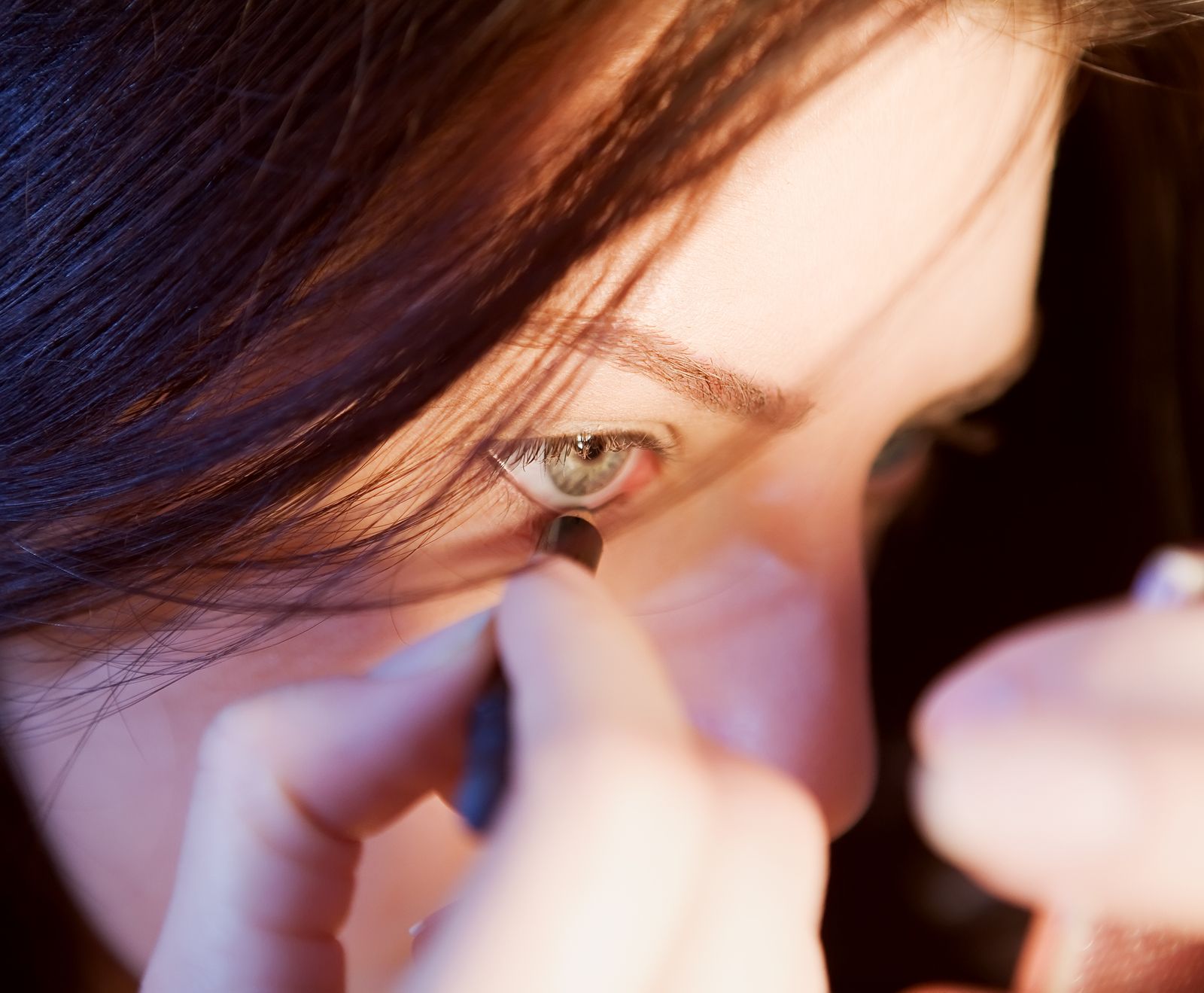
Lash serums are one of the most popular beauty purchases of the last decade, and many of the best known formulas share a secret: they contain a prostaglandin analog. These are close chemical cousins of glaucoma eye drops, and they can change more than your lashes. Darker eyelid skin, a permanent shift in eye color and a hollow, sunken look around the eyes are all documented effects of this ingredient family.
This guide walks through each side effect in plain language, what the research actually shows, which changes tend to fade after you stop and which may not, and when it is time to call an eye doctor. If you are new to the topic, start with our pillar guide on what prostaglandin-free lash serum means and why it matters.
None of this is meant to scare you. It is meant to help you read a label with clear eyes and make a choice you feel good about.
Key takeaways
- Prostaglandin analogs (bimatoprost, isopropyl cloprostenate and related compounds) can darken eyelid skin, change iris color and cause fat loss around the eyes.
- Iris darkening is described as likely permanent on the Latisse label. Eyelid darkening usually fades after stopping.
- Many over-the-counter cosmetic serums contain prostaglandin analogs, and some do not list them clearly on the package.
- See an eye doctor for eye pain, vision changes, persistent redness, or if you have glaucoma, uveitis or recent eye surgery.
What prostaglandin analogs are and why they are in lash serums
Prostaglandin analogs are lab-made molecules modeled on prostaglandins, natural signaling compounds the body uses in many tissues. In eye care, drugs such as bimatoprost are used to lower eye pressure in glaucoma. Doctors noticed that patients using those drops developed longer, darker lashes, and that observation led to Latisse, a prescription bimatoprost 0.03% solution approved by the FDA for eyelash hypotrichosis (inadequate or not enough lashes) [1][2].
Because the lash effect is real and noticeable, related compounds began showing up in cosmetic serums sold in beauty aisles and online. The American Academy of Ophthalmology notes that many over-the-counter serums contain isopropyl cloprostenate, a prostaglandin analog that is not FDA approved, and that these products have not been through FDA testing [2]. You can learn more about the full range of formulas in our guide to lash serum types and ingredients.
The important point: a molecule strong enough to change how lash follicles behave can also affect the skin, fat and iris right next to them. That is where the side effects come from.
The main side effects, one by one
Darkened eyelid skin
Darkening of the skin around the eye, sometimes called periorbital hyperpigmentation, is one of the most common effects. On the Latisse label, skin hyperpigmentation is listed among the most frequent adverse reactions, reported in roughly 3% to 4% of patients in the clinical trial [1]. It can look like a shadow or a faint eyeliner line that does not wash off.
The label says lid pigmentation has been reported to be reversible after stopping in most patients [1]. The AAO likewise notes that skin changes tend to clear once the drug is discontinued [2].
Change in eye color (iris pigmentation)
This is the side effect people worry about most, and for good reason. Prostaglandin analogs can increase brown pigment in the iris, the colored part of the eye. The change can take months to years to appear, and the Latisse label describes it as likely to be permanent [1]. The AAO also states that iris darkening cannot be reversed [2]. People with lighter or mixed eye colors, such as hazel or green-brown, may be more likely to notice it.
A 2021 safety review in Dermatologic Surgery concluded that the risk of increased iris pigmentation with lash products has not been adequately investigated [4]. In other words, we do not have a precise number for how often it happens with cosmetic use.
Fat loss and hollowing around the eyes
Eye doctors have a name for a cluster of changes seen with prostaglandin glaucoma drops: prostaglandin-associated periorbitopathy, often shortened to PAP. It can include loss of the fat pads around the eye, a deeper upper lid crease, a sunken or hollow look, and sometimes a droopier lid.
A 2022 study in Aesthetic Surgery Journal asked whether the same thing happens with cosmetic lash lengtheners [3]. The authors described a 35-year-old woman who developed thin, wrinkled, darker skin and hollowing around the eyes after 10 months of using a serum containing isopropyl cloprostenate. The changes reversed about 6 months after she stopped. Blinded graders also reviewed before-and-after photos published by brands and scored the prostaglandin serum photos significantly higher for signs of volume loss than photos from non-prostaglandin serums or false lashes [3].
The Steinsapir review adds that clinical trials of bimatoprost for lashes may have systematically underreported periorbitopathy because of how those trials were designed [4].
Redness, itching and irritation
Eye itching and conjunctival hyperemia (red eyes) were among the most common reactions in the Latisse trial, each in roughly 3% to 4% of patients [1]. Irritation is usually mild and often improves after stopping, but persistent redness deserves a check by an eye doctor.
Hair growth where you did not want it
Because prostaglandin analogs act on hair follicles, repeated contact with nearby skin can lead to hair growth outside the lash line. The Latisse label warns about this and advises blotting away any excess [1].
Eye pressure and other eye conditions
Bimatoprost can lower intraocular pressure. That sounds harmless, but the label notes it can interfere with glaucoma treatment, so people already using prostaglandin eye drops should talk with their doctor and be monitored [1]. The label also advises caution in people with active eye inflammation (such as uveitis) and those at risk for macular edema [1].
Which side effects fade and which may not
Here is a quick summary based on the Latisse prescribing information, the AAO and the published case report. Cosmetic serums with other prostaglandin analogs have far less formal data, so treat this as a general guide.
| Side effect | How common (Latisse trial) | After stopping |
|---|---|---|
| Eyelid skin darkening | About 3% to 4% [1] | Usually fades in most people [1][2] |
| Iris color change | Not precisely known for cosmetic use [4] | Likely permanent [1][2] |
| Eye itching or redness | About 3% to 4% each [1] | Usually improves |
| Fat loss or hollowing (PAP) | Possibly underreported [4] | Reversed in about 6 months in one case [3] |
| Unwanted hair growth nearby | Reported [1] | Expected to stop with use |
| Lash changes themselves | The intended effect | Lashes return toward baseline over weeks to months [1] |
That last row matters. Prostaglandin lash effects are not permanent either. The label says lashes are expected to return to their pre-treatment level after stopping [1]. We cover this in more detail in what happens when you stop using lash serum.
The hidden ingredient problem
You might assume you would know if your serum contained a drug-like ingredient. Unfortunately, that is not always the case.
By the numbers
- In a study of 79 cosmetic lash products (Couteau and Coiffard, Ann Pharm Fr, 2026), about 30% contained a prostaglandin analog, with six different analogs identified [5].
- In a lab analysis of 64 lash serums bought online (Rahman et al., J Pharm Biomed Anal, 2022), 4 contained bimatoprost and 3 of those 4 did not list it on the label. Another 8 contained other prostaglandin analogs [6].
- In the Latisse clinical trial (FDA label), eye itching, red eyes and skin darkening each occurred in about 3% to 4% of patients [1].
The Jamison study authors also observed that customer-facing ingredient lists often made no mention of prostaglandin analogs [3]. That is why it pays to know the chemical names. Our step-by-step guide on how to spot prostaglandin analogs on a lash serum label lists the names to look for.
Who should be especially cautious
Anyone can experience these effects, but some people have more reason to think twice or talk to a doctor first:
- People with light, hazel or mixed-color eyes who want to avoid any chance of iris color change.
- Anyone with glaucoma or ocular hypertension, especially if already using prostaglandin eye drops [1].
- People with a history of uveitis, eye inflammation, macular edema or recent eye surgery [1][2].
- Those who already have hollow or deep-set eyes and want to avoid further volume loss.
- People who are pregnant or breastfeeding. The AAO says Latisse is not recommended in these situations [2]. See lash serum during pregnancy and breastfeeding.
- Contact lens wearers, since Latisse contains benzalkonium chloride, which can discolor soft lenses [1]. More in using lash serum with contact lenses.
If you are using a prostaglandin serum now
If you have read this far and realized your current serum contains a prostaglandin analog, you do not need to panic. Here are calm, practical steps:
- Take clear, well-lit photos of your eyes and lids today so you have a baseline to compare against.
- Check whether you have noticed any darkening of the lid skin, a change in eye color or a more hollow look.
- Apply only to the upper lash line and blot any excess, as the Latisse label directs [1].
- If you decide to stop, expect your lashes to gradually return toward their usual look over weeks to months [1].
- If you want to keep a lash serum in your routine, consider one that is prostaglandin-free. Our buyer’s checklist for prostaglandin-free lash serums can help.
Many people find that a prostaglandin-free conditioning serum, paired with gentle habits from our everyday lash care guide, gives them a lash routine they feel comfortable sticking with.
When to see an eye doctor
Lash serum side effects are usually not emergencies, but some symptoms need prompt attention. Contact an ophthalmologist or optometrist if you notice:
- Eye pain, light sensitivity or any change in vision.
- Redness, swelling or irritation that does not improve within a few days of stopping the product.
- Any change in the color of your iris.
- New hollowing, a deeper lid crease or a droopy upper lid.
- Discharge or crusting, which can signal infection.
Also check with an eye doctor before starting any prostaglandin product if you have glaucoma, eye inflammation, a history of eye surgery, or use prescription eye drops [1][2]. If lash thinning itself is the concern, our pillar on thin or falling eyelashes covers causes worth ruling out, and our lash resources page can help you find the right specialist.
Looking for a prostaglandin-free lash serum?
XXtraLash is a prostaglandin-free eyelash serum that conditions lashes for a longer-looking, fuller-looking lash line. Each 3 mL bottle comes with a precision brush for applying right along the lash line.
Frequently asked questions
Can prostaglandin lash serum change your eye color permanently?
It can. The Latisse prescribing information says increased brown iris pigmentation is likely to be permanent, and the American Academy of Ophthalmology also notes it cannot be reversed. It may take months or years to appear and is more noticeable in lighter or mixed eye colors.
Does eyelid darkening from lash serum go away?
In most people, yes. The Latisse label reports that eyelid skin darkening has been reversible after stopping the product in most patients. If darkening does not fade over a few months, check with an eye doctor or dermatologist.
Can lash serum cause sunken or hollow eyes?
Prostaglandin analogs are linked to loss of fat around the eyes, called prostaglandin-associated periorbitopathy. A 2022 study described this in a cosmetic serum user, and the changes reversed about six months after stopping. Prostaglandin-free serums do not contain this ingredient class.
Are over-the-counter lash serums prostaglandin-free?
Not always. One 2026 study found that about 30% of 79 cosmetic lash products contained a prostaglandin analog, and a 2022 lab study found some serums contained bimatoprost that was not listed on the label. Always check the ingredient list for names like isopropyl cloprostenate.
Is a prostaglandin-free lash serum free of side effects?
No product is completely free of risk. Any serum can cause irritation or an allergic reaction, so patch test first and stop if you notice redness or itching. A prostaglandin-free formula avoids the specific side effects linked to prostaglandin analogs, such as iris color change.
Related reading
- Prostaglandin-Free Lash Serum: What It Means and Why It Matters
- How to Spot Prostaglandin Analogs on a Lash Serum Label
- Latisse vs. Over-the-Counter Lash Serums: What’s the Difference?
- How to Choose the Best Prostaglandin-Free Lash Serum
- Is Lash Serum Safe? What to Know Before You Start
Sources
- LATISSE (bimatoprost ophthalmic solution) 0.03% prescribing information, FDA label database
- What You Should Know About Eyelash Growth Serums, American Academy of Ophthalmology
- Jamison A, et al. Do Prostaglandin Analogue Lash Lengtheners Cause Eyelid Fat and Volume Loss? Aesthet Surg J. 2022
- Steinsapir KD, Steinsapir SMG. Revisiting the Safety of Prostaglandin Analog Eyelash Growth Products. Dermatol Surg. 2021
- Couteau C, Coiffard L. Prostaglandin analogues in cosmetic products formulated for eyelash lengthening. Ann Pharm Fr. 2026
- Rahman MS, et al. Screening and quantification of undeclared PGF2α analogs in eyelash-enhancing cosmetic serums using LC-MS/MS. J Pharm Biomed Anal. 2022