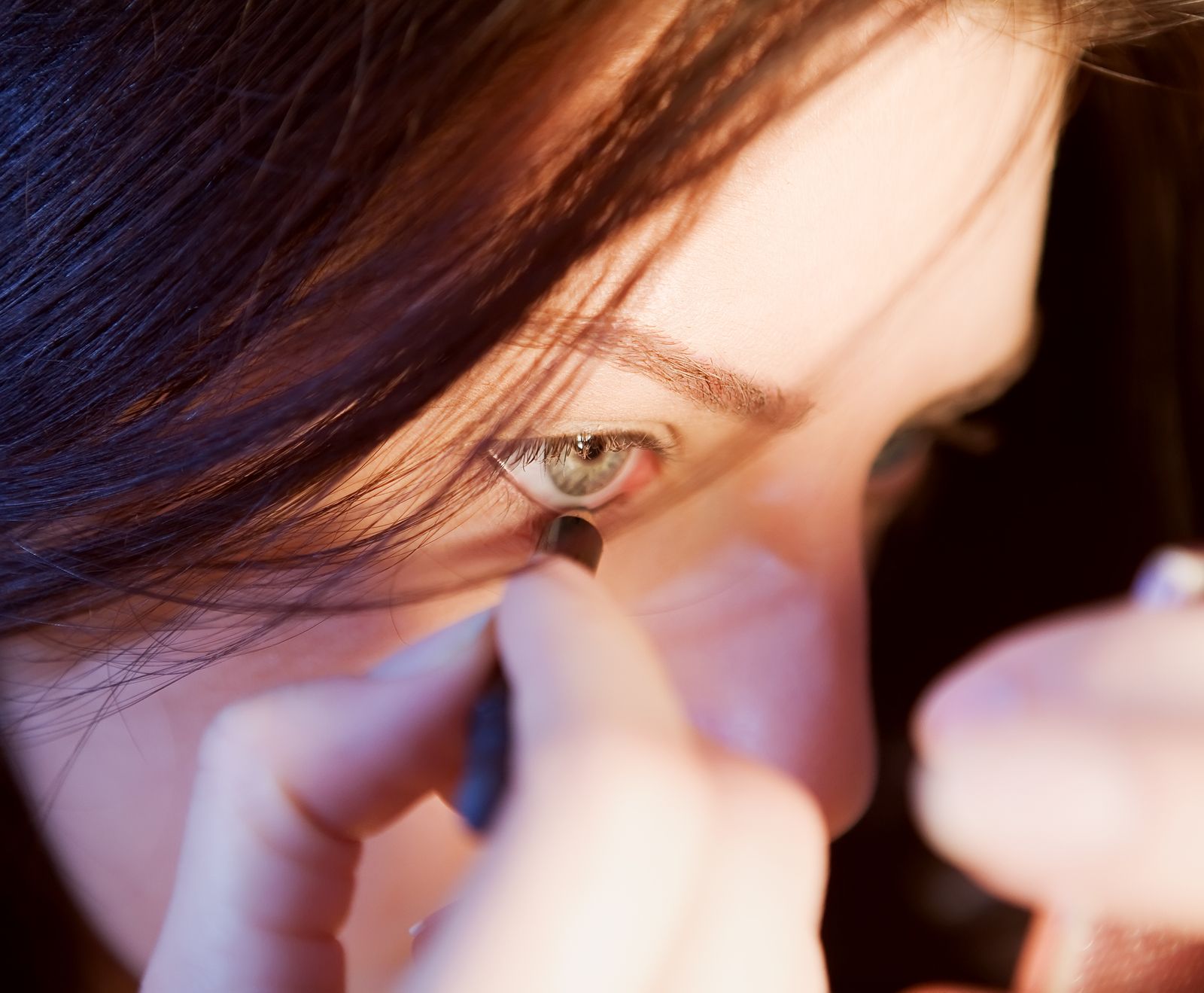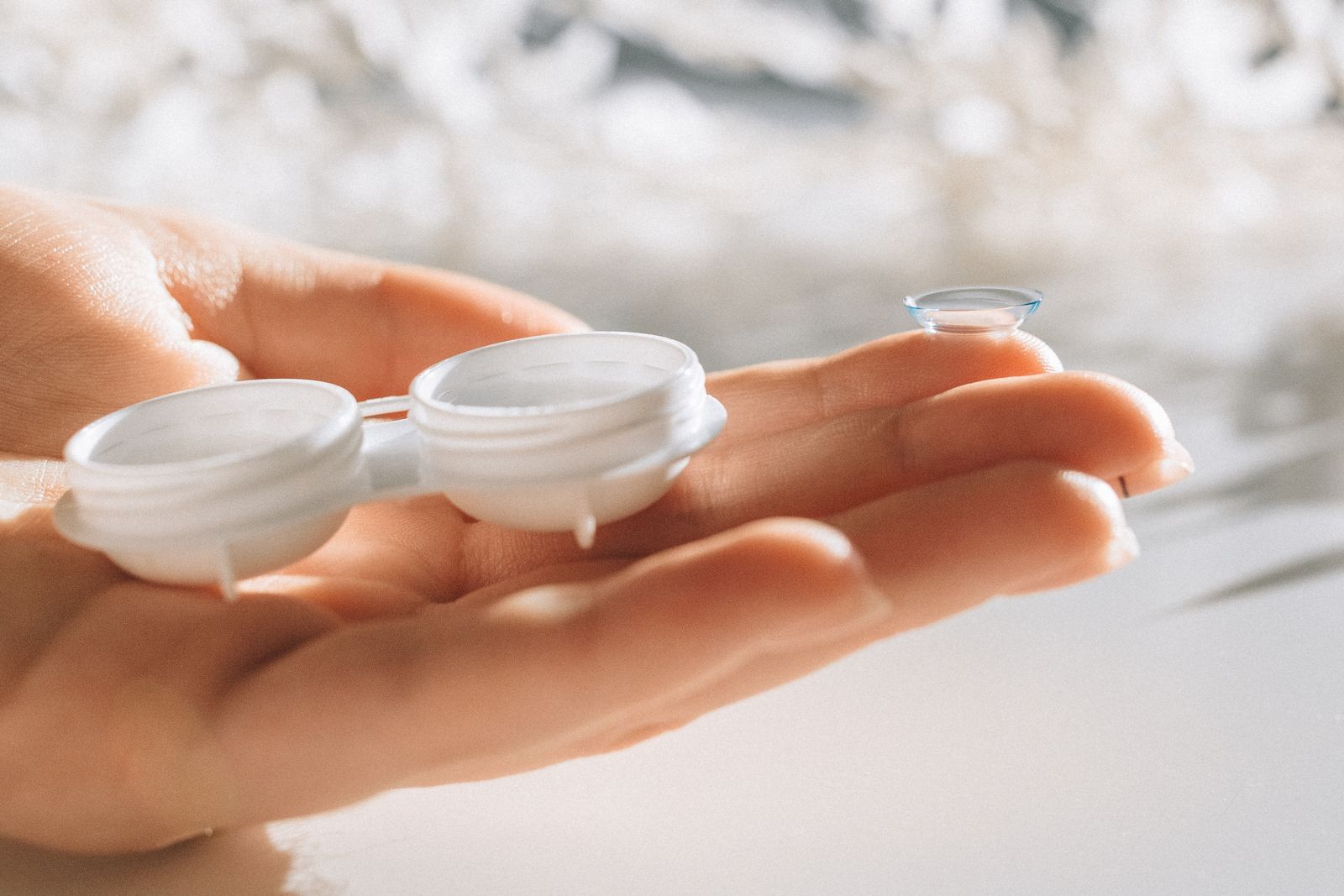
If you wear contact lenses, you already know the eye area can be finicky. A stray fleck of mascara under a lens is enough to ruin a morning. So it makes sense to ask whether a lash serum, a liquid you brush right along the lash line, plays well with contacts.
For most people the answer is yes, with a few simple habits. This guide covers when to remove your lenses, how long to wait before putting them back in, and the warning signs that mean you should take your lenses out and call your eye doctor. If you are still choosing a serum, start with Prostaglandin-Free Lash Serum: What It Means and Why It Matters.
Key takeaways
- Most lash serums can be used by contact lens wearers, as long as the serum stays on the lash line and out of the eye.
- The simplest routine: take lenses out, apply serum to clean lash lines, and let it dry fully before putting lenses back in.
- The prescription lash drug Latisse tells users to remove lenses before applying and wait 15 minutes before reinserting. That is a useful benchmark for any serum.
- Remove your lenses and call your eye doctor right away for redness, pain, discharge, light sensitivity or blurry vision.
The short answer
Lash serums are designed to be applied to the skin at the base of the lashes, not into the eye. When you apply a thin line and let it dry, very little should reach the surface of your eye. The risk with contacts comes from product that does get into the eye, because a lens can hold a liquid or residue against the eye’s surface longer than tears alone would.
That is why the best practice is to keep your lenses out while you apply and while the serum dries. You can also make the job easier by applying at times when your lenses would be out anyway, such as before bed and first thing in the morning before you put them in.
What the Latisse label says about contact lenses
The only lash product with FDA-approved directions is the prescription drug bimatoprost (Latisse). Its label states that contact lenses “should be removed prior to application” and “may be reinserted 15 minutes following its administration” [1]. The American Academy of Ophthalmology repeats the same advice: remove lenses before using Latisse and wait 15 minutes before putting them back [2].
Latisse’s label notes that its preservative, benzalkonium chloride, may be absorbed by soft contact lenses [1]. Cosmetic serums use their own preservative systems, and directions vary by brand. Without brand-specific guidance, the 15-minute window from the Latisse label is a sensible, cautious benchmark for any serum. If your serum’s packaging gives its own contact lens directions, follow those.
A step-by-step routine for contact lens wearers
Evening
- Wash and dry your hands with soap and water and a lint-free towel. The AAO recommends this before touching your lenses [3].
- Remove your lenses and store them in fresh solution.
- Take off eye makeup gently and pat your lids dry.
- Apply a thin line of serum along the base of your lashes. Our application guide shows exactly where.
- Let it dry, then go to bed without reinserting lenses.
Morning
- Wash your hands and face.
- Apply serum to clean, dry lash lines.
- Wait until the serum is completely dry. Aim for at least 15 minutes if you can.
- Wash your hands again, then insert your lenses.
- Apply any eye makeup after your lenses are in, so you can see clearly and flakes are less likely to end up under the lens.
| Step | Lenses in or out? | Why |
|---|---|---|
| Applying lash serum | Out | Keeps liquid from getting trapped under the lens |
| While serum dries | Out | Gives the serum time to set on the lash line |
| Applying mascara and eyeliner | In | Lets you see what you are doing and avoid flakes under the lens |
| Removing makeup at night | Out first | Reduces the chance of residue on the lens |
Why contact lens wearers need a little extra care
A contact lens sits directly on the surface of your eye for hours at a time. That is great for clear vision, but it also means anything that lands on the lens, such as a speck of makeup, a bit of lotion from your fingertips or a drop of serum, can stay in contact with your eye for longer than it otherwise would. Tears normally rinse small particles away. A lens can slow that rinsing.
That is the main reason eye care professionals focus so much on clean hands and clean habits for lens wearers [3]. A lash serum is not a special danger here. It simply joins the list of things, along with mascara, eye cream and makeup remover, that you want to keep on the outside of the eye.
It also explains why the order of your routine matters. Putting serum on with lenses out, letting it dry and only then inserting lenses keeps the two from meeting while the serum is still wet.
Special situations
Soft lenses vs. rigid gas permeable lenses
The Latisse label specifically mentions soft contact lenses, because its preservative, benzalkonium chloride, may be absorbed by soft lenses [1]. If you wear soft lenses, that is one more reason to keep serum out of the eye and let it dry before reinserting. Whatever type of lens you wear, the same routine makes sense, and your eye doctor can tell you if your lenses need anything different.
Daily disposables
Daily lenses make lash serum easy. Apply at night after you throw the lenses away, and in the morning before you open a fresh pair. If a lens ever feels off after application, you can simply replace it.
Extended-wear or overnight lenses
If you sleep in your lenses, your eye doctor’s instructions come first. Ask them how they would like you to fit a lash serum into your routine, since you will not have a natural lenses-out window at night.
If serum gets in your eye
It happens, especially while you are learning. Remove the lens, rinse your eye with clean water or sterile saline, and clean the lens with fresh solution or swap in a new one. Mild, brief stinging that fades quickly is common. Ongoing redness, pain or blurry vision is not, and that is a reason to call your eye doctor [3].
A few signs suggest your routine needs adjusting rather than a doctor’s visit: lenses that feel slightly filmy only in the morning, or mild dryness after application. Try applying serum earlier so it has longer to dry, using a little less product, and cleaning your lenses with fresh solution. If those small changes do not help, check with your eye doctor.
Other habits that keep lens wearers comfortable
- Do not apply product to the inner lid rim. The Latisse label directs users to apply only to the skin of the upper eyelid margin at the base of the lashes [1]. The same logic applies to a cosmetic serum: the base of the lashes, not the waterline.
- Keep everything clean. Do not let the serum brush touch other surfaces. The AAO warns that a contaminated bottle tip can cause serious eye infection [2].
- Never share eye products. The FDA advises against sharing or swapping eye cosmetics, even with a close friend [4].
- Skip products when your eyes are irritated. The FDA recommends avoiding eye cosmetics if you have an eye infection or inflamed skin around the eye, and throwing out cosmetics you were using when an infection started [4].
- Choose gentle formulas. Fragrance-free, simple formulas are a good fit for lens wearers. See our guide to lash serum for sensitive eyes.
Does the type of serum matter?
The contact lens routine above applies to any lash serum. What changes is the overall side effect profile. Serums with prostaglandin analogs carry warnings for redness, eyelid darkening and, with bimatoprost, iris pigmentation that is likely permanent [1][2]. Prostaglandin-free serums avoid those specific concerns. Our guides on prostaglandin side effects and Latisse vs. over-the-counter serums explain the differences.
If you also use a lash lift or lash extensions, read lash lift and lash serum for timing tips.
When to see an eye doctor
Contact lens wearers should take eye symptoms seriously, because some infections can progress quickly. The AAO advises removing your lenses and calling your eye doctor right away if your eyes become very red, painful, watery or sensitive to light, if your vision becomes blurry, or if you notice discharge [3]. These can be symptoms of an eye infection or another serious eye problem [3].
Also check in with your eye doctor if:
- Your lenses feel cloudy, greasy or uncomfortable after you start a new serum.
- Your eyelids become red, itchy or swollen. Stop the serum and other eye makeup while you sort out the cause.
- You have glaucoma, a recent eye surgery or another eye condition and want to start any lash serum.
Our lash resources page can help you find an eye care professional.
A prostaglandin-free serum that fits a lens-wearer’s routine
XXtraLash is a prostaglandin-free eyelash serum that conditions lashes for a longer-looking, fuller-looking lash line. Each 3 mL bottle comes with a slim precision brush, so you can place a thin line at the lash base, let it dry, and then put your lenses in.
Frequently asked questions
Can I wear contacts while using lash serum?
Yes, most people can. Remove your lenses before applying, keep the serum on the lash line rather than in the eye, and let it dry fully before putting lenses back in.
How long should I wait to put contacts in after lash serum?
Follow your serum’s own directions if it gives any. The prescription drug Latisse says lenses may be reinserted 15 minutes after application, which is a sensible benchmark for any serum.
Should I apply lash serum before or after putting in contacts?
Before. Apply serum with lenses out, let it dry, then insert lenses. Apply mascara and eyeliner after your lenses are in.
What if lash serum gets in my eye while wearing contacts?
Remove the lens, rinse your eye with clean water or saline, and clean or replace the lens. If redness, pain or blurry vision continues, call your eye doctor.
Is lash serum safe for daily disposable lens wearers?
The same routine applies. Daily lenses make things simpler because you can apply serum at night after removing them and in the morning before opening a new pair.
Related reading
- Prostaglandin-Free Lash Serum: What It Means and Why It Matters
- How to Apply Lash Serum the Right Way
- Lash Serum for Sensitive Eyes: How to Choose and Use One
- Is Lash Serum Safe? What to Know Before You Start
- Lash Care: Everyday Habits for Healthier-Looking Lashes
Sources
- LATISSE (bimatoprost ophthalmic solution) 0.03% prescribing information. U.S. Food and Drug Administration.
- What You Should Know About Eyelash Growth Serums. American Academy of Ophthalmology, 2019.
- Contact Lens Care. American Academy of Ophthalmology.
- Eye Cosmetic Safety. U.S. Food and Drug Administration.